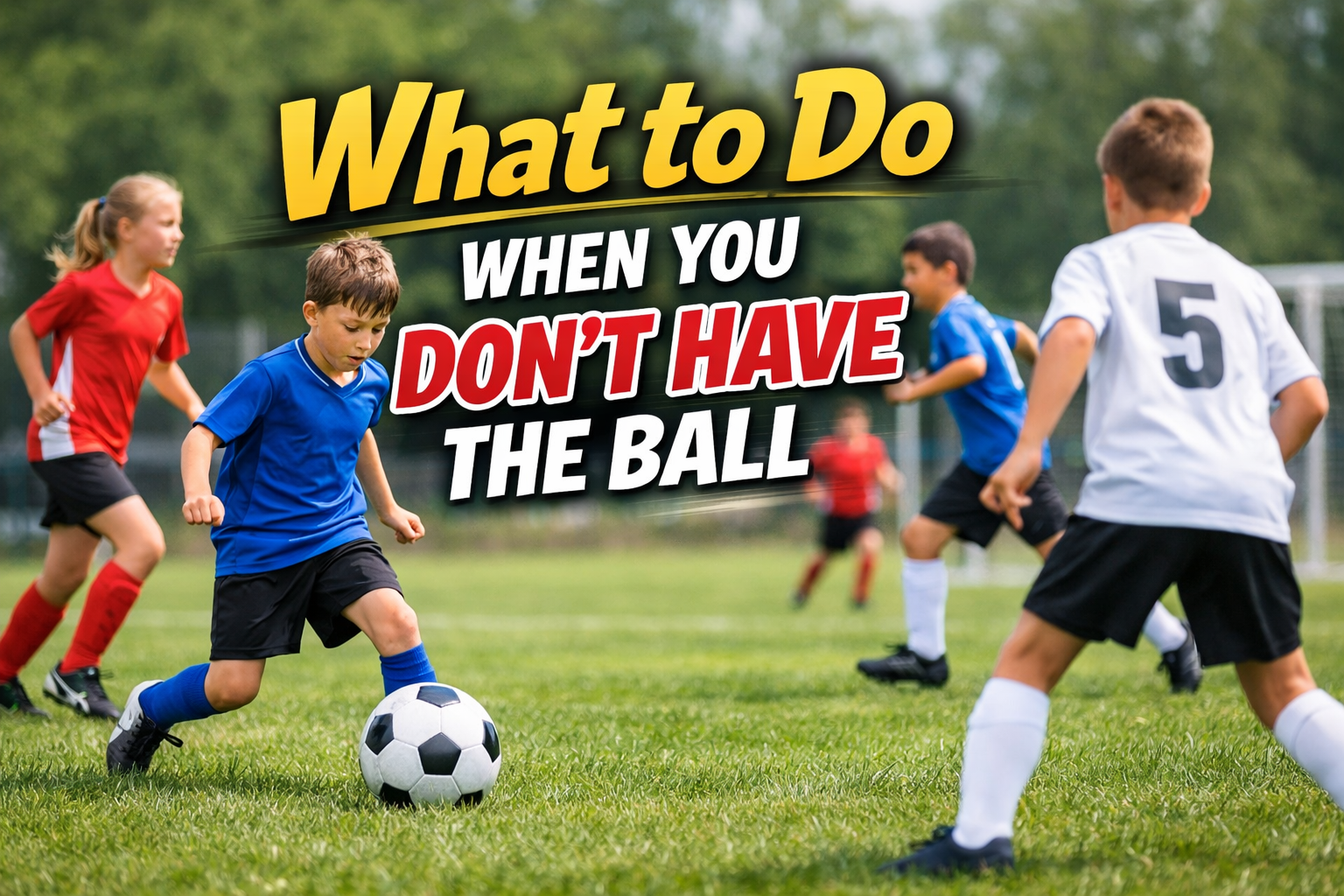
In soccer, every player touches the ball — but most of the game is played without it.
Knowing what to do when you don’t have the ball is one of the biggest differences between players who just chase and players who truly understand the game. The good news? These skills can be learned, practiced, and improved at any age.
1. Move Into Space (Don’t Hide)
When you don’t have the ball, your job is to make yourself useful.
That means:
- Move away from defenders
- Find open grass
- Give your teammate a clear passing option
If you stand still, the defense wins.
If you move, you make the game easier for your teammate.
Simple rule for players:
👉 If you can’t get the ball right now, move so you can get it next.
2. Support the Ball Carrier
Soccer is a team sport — no one should be alone with the ball.
Good support means:
- Staying close enough for a short pass
- Being slightly to the side or behind (not hiding behind defenders)
- Adjusting your position as your teammate moves
Think of it like being a safety net. If your teammate gets stuck, you’re the escape option.
3. Create Passing Angles
Standing directly in front of a teammate isn’t always helpful.
Instead:
- Move left or right to open an angle
- Step back if the defense is tight
- Drift wide to stretch the field
Passing lanes don’t magically appear — players create them with movement.
4. Defend Even Without the Ball
Defense is not just the defender’s job.
When your team loses possession:
- Get between the ball and the goal
- Mark a player
- Stay goal-side (closer to your goal than your opponent)
You don’t need to steal the ball every time.
Sometimes the best defense is slowing the attack and buying time for teammates.
5. Talk and Communicate
Soccer is loud when played well.
Players should:
- Call for the ball
- Warn teammates (“man on!”)
- Encourage each other
Communication helps everyone react faster — especially when things get hectic.
6. Be Ready Before the Ball Comes
Great players are already thinking about their next move before they receive the ball.
Ask yourself:
- Where will I go if I get the ball?
- Who can I pass to?
- What’s my safest option?
If you think early, you play faster — and faster soccer is better soccer.
7. Hustle Matters (Every Time)
Effort without the ball shows character.
Sprint back on defense.
Keep moving when you’re tired.
Help teammates even if the play isn’t coming to you.
These moments don’t always show up on the scoreboard — but coaches and teammates notice them every single time.
Why This Matters at the 10U Level
At younger ages, it’s easy to focus only on scoring and dribbling. But learning what to do without the ball:
- Builds teamwork
- Improves spacing
- Makes games less chaotic
- Helps every player feel involved
Games show skills. Practice builds understanding.
And understanding the game starts when the ball isn’t at your feet.